
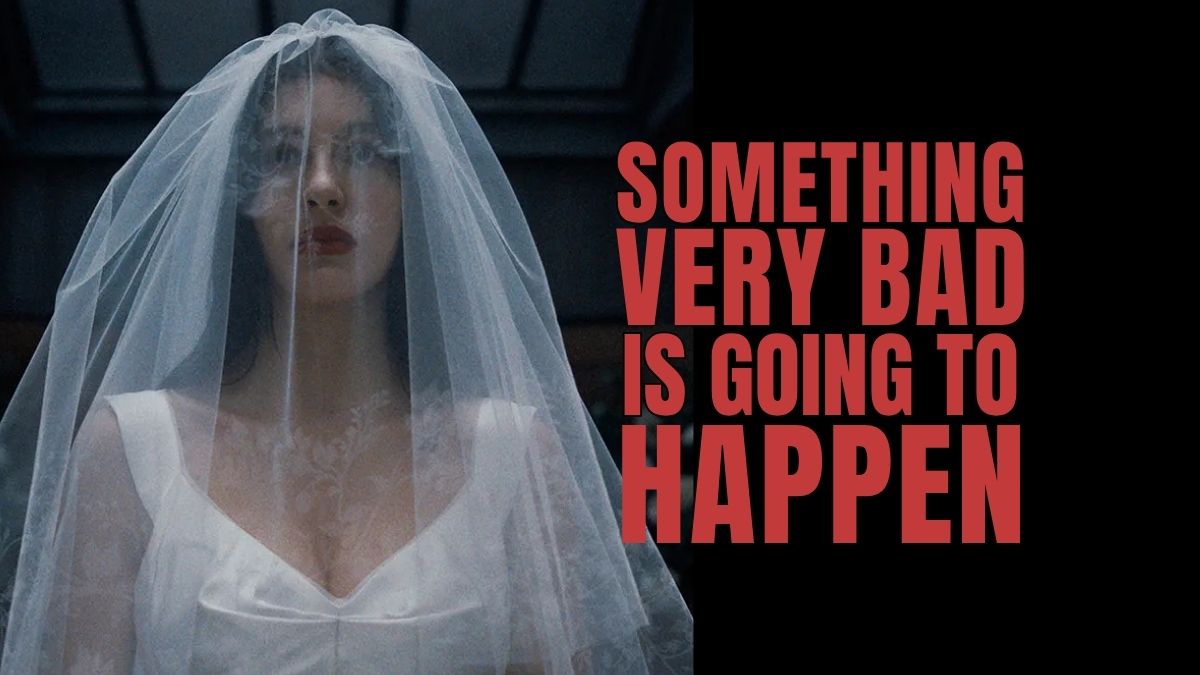
There’s a moment in some relationships that no one really talks about.
Nothing is wrong.
Nothing has happened.
No fight, no shift, no obvious reason to worry.
And still—something feels off.
Not in the relationship itself. In you.
A quiet thought slips in, almost casually:
This isn’t going to last.
You don’t panic. You don’t say anything. You just… adjust. A little less open. A little more careful. A little more prepared.
That’s how it starts.
Not with drama. With doubt.
When calm doesn’t feel safe

Some people don’t struggle with toxic relationships.
They struggle with healthy ones.
Because when things are steady—when someone shows up consistently, communicates clearly, doesn’t play games—it removes the usual distractions. There’s nothing to chase, nothing to decode, nothing to fix.
And that silence?
It gets filled by your own thoughts.
Why does this feel too easy?
When is this going to change?
What am I missing?
So instead of experiencing the relationship, you start observing it. Like you’re watching for a glitch in the system.
And the more you watch, the more you find.
The mind doesn’t trust what it hasn’t seen last
If love has ever blindsided you before, your brain doesn’t forget.
It doesn’t file that experience away as “past.” It upgrades it into a rule.
Love can change suddenly.
People can pull away without warning.
Stability can flip overnight.
So now, even when something feels good, your system stays half-alert.
Not because you’re negative. Because you’ve learned.
That’s the part people mislabel as self-sabotage. Most of the time, it’s not sabotage—it’s pattern recognition that hasn’t been updated.
Your brain isn’t trying to ruin anything. It’s trying to make sure you’re never caught off guard again.
Unfortunately, it does that by never letting you fully relax.
The subtle ways fear starts running the relationship
This is where things get slippery.
Because you won’t see a big, obvious mistake. You’ll see small shifts that feel completely justified in the moment.
You start reading into tone.
You notice gaps in communication more than consistency.
You pull back slightly—just to see if they lean in.
You hesitate before opening up, just in case.
None of this feels dramatic.
It feels smart. Controlled. Even emotionally mature.
But to the person on the other side, it feels different.
It feels like distance.
Like something is being held back.
Like they’re being quietly evaluated instead of fully trusted.
Like they’re trying to pass a test they didn’t sign up for.
And over time, that changes how they show up too.
This is how good relationships start to feel heavier than they should.
The cycle no one notices until it’s too late

Here’s the part that’s almost unfair.
The fear you’re trying to protect yourself with… slowly creates the exact outcome you were worried about.
You expect distance → so you become cautious.
You become cautious → so the connection weakens.
The connection weakens → so they pull back.
And when they do, it lands like confirmation:
I knew it.
Except the relationship didn’t break all at once.
It adjusted itself around your fear, until it couldn’t hold its shape anymore.
From the outside, it looks like “it just didn’t work out.”
From the inside, it was a slow shift from ease to tension that no one fully named.
If you’ve experienced this, read this article on Dating After a Breakup—because a lot of this pattern doesn’t start in the current relationship. It starts in the one that came before it.
Why this feels so real (even when it’s not)
The hardest part about this pattern is how convincing it is.
It doesn’t sound like fear.
It sounds like intuition.
It tells you you’re being aware. Careful. Smart.
But there’s a difference between noticing something real and reacting to something familiar.
Sometimes your gut is picking up on subtle inconsistencies.
Other times, it’s replaying an old story with a new cast.
If you’ve ever found yourself scanning for signs instead of enjoying what’s right in front of you, you’ve felt that difference.
Sometimes over-analysing from Day 1 comes with a tendency to want to share but nobody enjoys a first date that feels like a job interview, nor do we want to hear your entire life story. In fact this is probably the most common 1st date mistake that instantly kills attraction.
The relationships that look fine… until they don’t

One of the strangest things about this kind of fear is how invisible it is from the outside.
There’s no scandal. No dramatic turning point.
Just a slow change in energy.
Conversations become slightly guarded.
Affection becomes slightly measured.
Vulnerability becomes slightly delayed.
Nothing you could screenshot and send to a friend saying, “This is the problem.”
But enough to shift how the relationship feels.
That’s why people end up saying things like, “I don’t know what happened.”
What happened is that fear quietly became part of the dynamic.
Not loudly. Not destructively. Just consistently enough to matter.
The uncomfortable truth about that feeling
Not every uneasy feeling is a warning.
Some of them are just… echoes.
Old experiences that haven’t been fully processed, still trying to keep you safe by keeping you on edge.
That doesn’t mean you ignore everything you feel. It means you get better at questioning where it’s coming from.
Because if you treat every calm moment like the setup for something bad, you never actually experience the relationship you’re in.
You experience a version of it filtered through anticipation.
And anticipation is a terrible place to try and build something real.
What changes when you stop treating fear like fact
It’s not about becoming fearless.
It’s about not reacting to every thought like it’s a signal.
It’s catching the moment where your brain says, this is going to go wrong, and deciding not to immediately reshape your behavior around it.
It’s choosing to stay open when your instinct is to tighten.
To ask directly instead of testing quietly.
To let things be good without needing proof that they’ll stay that way.
The fact is the older you get, the more consistent the doubt gets, especially if you’re still single. As the pressure mounts, it gets much harder to build a strong connection, which is why most people in their 40’s simply give up. If that’s you, read this article on Love in Your 40s: How to Keep Dating Fun and Find True Connection (thank us later!)
Maybe the calm isn’t the problem

Maybe nothing bad is about to happen.
Maybe the relationship isn’t fragile.
Maybe it doesn’t need to be monitored this closely.
Maybe it doesn’t need you to stay one step ahead of a problem that hasn’t shown up.
Maybe the only thing that feels unfamiliar… is the absence of chaos.
And if that’s the case, the real work isn’t fixing the relationship.
It’s learning how to sit in something good without waiting for it to fall apart.